

If you are planning a barn conversion, one of the first questions you will face is how much Value Added Tax, better known as VAT, you need to pay on the building work. The answer is not always straightforward, and getting it wrong can incur a significant added cost. This guide explains the rules around VAT on barn conversions, what qualifies for the reduced rate, and where the standard 20% rate still applies.
Key takeaways
VAT is a consumption tax added to the price of most goods and services. The final consumer ultimately bears the cost, while VAT-registered businesses collect and pay it to the government at each stage of production. In the United Kingdom generally, VAT is charged at 20% for goods and services. In some instances a lower rate of VAT can be charged.
Most barn conversions do not automatically attract the reduced 5% VAT rate. The standard rate of 20% applies to most construction services and building materials in the UK. Only where specific HMRC conditions are met can the rate drop to 5%.
Here is what you need to know at a glance:
- The reduced 5% VAT rate applies to certain residential conversions where a non-residential building is being converted into a new dwelling and the project meets HMRC’s eligibility criteria.
- Some elements of a barn conversion may still be charged at 20% VAT, including extensions, certain building materials purchased directly by the homeowner, and professional fees from architects and surveyors.
- Devon barn conversions frequently involve agricultural buildings such as stone barns, linhays and shippons. These typically count as a converted non-residential building for VAT purposes when turned into a home.
- Not every cost on your project will be eligible for the reduced rate. Homeowners should budget on a mixed-rate basis rather than assuming the entire build is 5%.
Peninsula Custom Construction are local barn conversion specialists in Devon who work with clients’ accountants to ensure the VAT treatment is set correctly from day one, helping you avoid costly surprises later in your self build project. Whilst we are experienced barn conversion specialists, you should always seek expert tax advice for your own circumstances to comply with HMRC regulations.
What is the 5% VAT rate for conversions?
The standard rate of VAT on building work in the UK is 20%. The reduced rate of 5% is a special concession set out in HMRC VAT Notice 708. It applies only to specific qualifying residential conversion work, such as converting a non-residential property into a dwelling.
Key points to understand:
- The reduced VAT rate for conversions is 5%, and it covers the contractor’s labour and qualifying building materials they supply and install during the conversion work.
- VAT-registered builders should invoice at 5% for labor and materials related to the conversion. This is not something the homeowner claims back later. Contractors must apply the reduced rate directly on invoices at the point of supply. This is why its important to use a trusted and experienced barn conversion specialist who understands the process.
- The 5% rate is separate from the DIY housebuilders scheme, which covers materials bought directly by the self-builder.
For example, converting a stone milking parlour near Totnes into a two-bed cottage would typically qualify for the 5% rate on qualifying services and installed materials, provided the building was genuinely non residential before the project started.
When does a barn conversion qualify for 5% VAT?
The 5% vat rate can apply when conversion work transforms a non-residential building, such as a traditional farm barn, into one or more self-contained dwellings. Converting a non-residential building into a dwelling qualifies for reduced VAT, but several key conditions must be met.
- The building must not have been residential in its last lawful use, or it must not have been lived in as an existing dwelling for at least 10 years before building work starts.
- Evidence of previous lawful use is required for reduced VAT eligibility. Council tax records, planning history, and farm records all help demonstrate non residential status.
- The finished unit must be a proper single dwelling or dwellings in its own right, with its own access, kitchen, bathroom, and sleeping space.
- Evidence of planning permission is required for VAT claims. The conversion must have planning consent or permitted development rights for residential use.
Consider an old cattle barn outside Exeter that has only ever been used for livestock and storage. Converting it into a family home would normally meet the 5% criteria on qualifying conversion work. Associated site works carried out in the course of the conversion, such as drainage and access paths, can also attract the 5% rate.
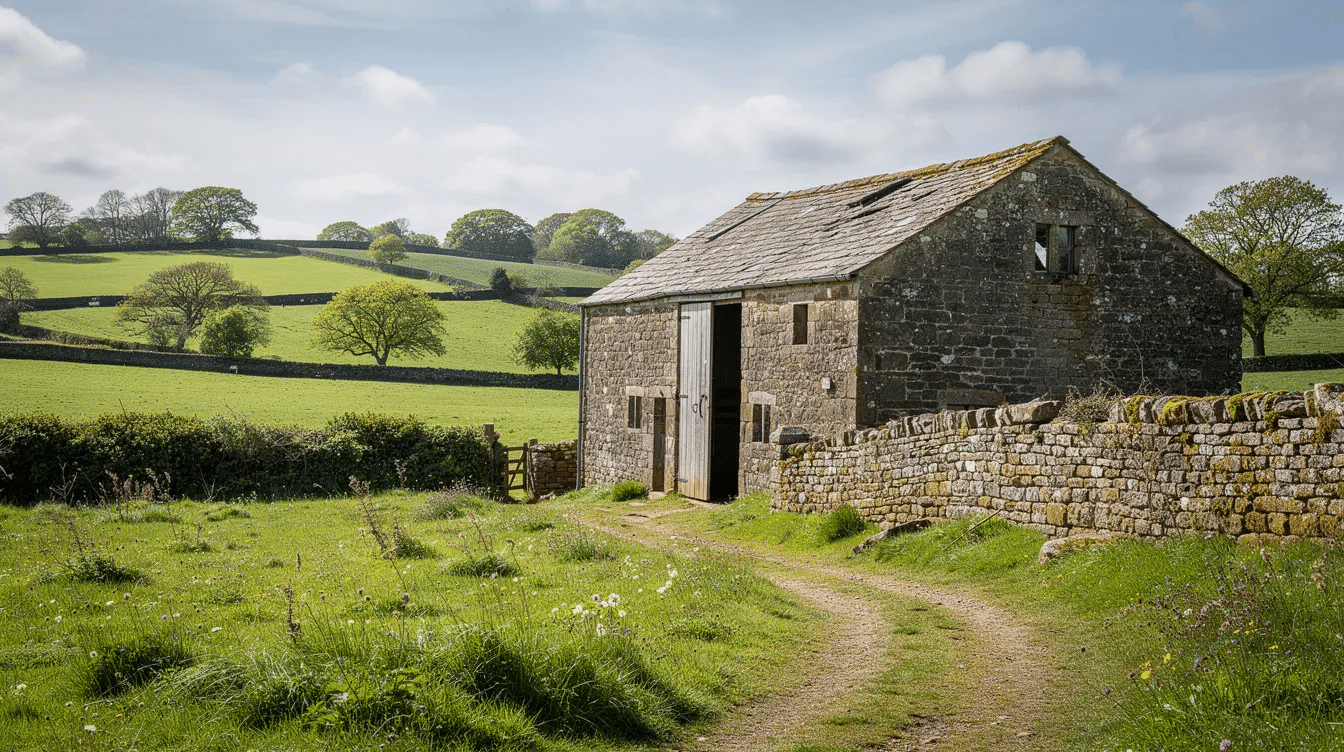
Specialists in barn conversions in Devon, like Peninsula Custom Construction, understand how to document use history and structure projects so that qualifying work is invoiced correctly.
When you must pay the standard 20% VAT
The standard rate of 20% VAT is the default for most building work, and many parts of a barn conversion project will still attract it. It is worth noting that mixed-rate invoicing is common on these building projects.
Common scenarios where you pay vat at 20%:
- Extensions or additions beyond the original barn footprint that are not part of the qualifying conversion of the existing building.
- Stand-alone garages, outbuildings, or decorative work not directly connected to creating the new dwelling.
- Professional fees such as architects and surveyors are subject to the standard 20% VAT rate. Architect and designer fees are not eligible for VAT relief.
- Many items such as carpets and fitted furniture remain at a standard VAT rate of 20%. White goods – washing machines and free standing appliances – and fitted furniture are not eligible for VAT relief, even if they are fitted at the time of construction.
- Non-building supplies like security alarms are not reclaimable at the reduced rate.
- Landscaping does not qualify for VAT relief or DIY schemes. Landscaping and driveways cannot be reclaimed for VAT.
On a typical Devon barn project, you might see the main conversion work invoiced at 5% VAT while a later garden landscaping package is invoiced at 20%. Proper separation of these elements on invoices is essential.
HMRC rules for non-residential to residential conversion
HMRC VAT Notice 708 sets out when a converted non residential building qualifies for reduced or zero rating. The VAT treatment of barn conversions depends on previous use and whether the work is carried out by a developer or a private homeowner.
- A non-residential building for VAT purposes includes agricultural buildings such as livestock housing, grain barns, machinery stores, and business premises. These normally qualify if they have never been designed or used as a home.
- The 10-year rule: if a building was once a dwelling but has not been used as one for at least 10 years before the conversion, it may still qualify. Evidence of previous use is required for VAT eligibility in every case. A Rateable Value (RV) provided by the Valuation Office is a strong indicator of commercial use, but is not a legal guarantee.
- HMRC defines a dwelling as self-contained, with its own access, privacy, no occupancy restrictions preventing long-term living, and capable of separate sale.
- Zero-rated VAT applies when creating a new dwelling from a barn and granting a major interest such as a first sale or long lease. This is a similar provision but distinct from the 5% reduced rate on construction services.
For example, converting a redundant threshing barn near Dartmoor into two holiday lets could qualify for reduced rate treatment if each unit has its own kitchen, bathroom, and access. If the converted units are then sold, zero rating on the first grant of a major interest may apply instead.
Does the age or condition of the barn matter?
The barn’s age and use history directly affect VAT treatment. A historic stone barn that has only ever been agricultural is typically a strong case for 5% VAT on qualifying conversion work. A former cottage later used as a store is more complex because it was a dwelling in the past.
- If the property was last a dwelling but has been empty for at least 2 years, separate “empty home” relief may apply at 5% on renovation work. This is distinct from converting a non-residential barn.
- Severe dereliction or structural collapse can cause problems. If most of the original structure is demolished to ground level and rebuilt, HMRC may treat the project as a new build rather than a conversion, which changes the VAT profile entirely.
- Retaining existing walls, roof structure, and fabric helps maintain conversion status. Decisions about how much to retain should balance safety, building regulations, and VAT considerations.
- Local evidence matters. Council tax records, original documents, planning papers, and statements from long-term neighbours in Devon villages are often needed to demonstrate the barn’s condition and occupancy history to HMRC.
VAT on labour vs materials
VAT is charged differently depending on who supplies the materials and whether the conversion qualifies for the reduced rate.
- Where the barn conversion qualifies, the contractor can charge VAT at 5% on both their labour and the qualifying building materials they supply and install as part of the conversion work. The main contractor must charge the correct 5% rate directly on invoices.
- Materials you buy directly from builders’ merchants, such as timber, insulation, roofing and windows, will typically be charged at 20% VAT at the trade counter.
- Contractors charging 20% VAT when the work qualifies for 5% is a common pitfall. Always confirm your builder is VAT registered, something Peninsula Custom Construction is, and understands the rules before work begins.
- Common examples of qualifying building materials include roof tiles, doors, plumbing components, and wiring. Excluded items include carpets, most kitchen appliances, and loose furniture.
To illustrate the difference: on £100,000 of qualifying conversion work, paying 5% VAT costs £5,000 compared with £20,000 at the standard rate. That is a saving of £15,000, which on many barn conversions in Devon covers a significant portion of the costs related to finishing and fitting out the new home. This is why understanding VAT on barn conversions is such a key factor to consider with your project as it can make the difference in providing those finishing touches for a far smaller fee.
VAT for barn conversions in Devon
Devon’s rural character and large number of traditional farm buildings make barn conversions popular across areas like Dartmoor, Exmoor, the South Hams, and the North Devon coast.
- Typical Devon scenarios include converting stone barns in the South Hams into a family home, turning linhays or shippons into a holiday home, or re-using modern portal-frame agricultural buildings as contemporary dwellings.
- Local planning policies from Devon district councils generally support the re-use of rural buildings. Building regulations compliance must align with HMRC’s expectations for the property to be treated as a new dwelling.
- Peninsula Custom Construction’s experience as barn builders in Devon means they regularly work with local planners, building control, and clients’ tax advisers to structure projects in a VAT-efficient way. You can view some of our previous work on our projects page.
For those interested in the design and heritage aspects of these projects, Peninsula’s guide to heritage barn conversions covers listed and historic building considerations that often apply to older Devon barns. Many of these structures are worth preserving, and the right approach protects both the building and your budget.
Can you claim VAT back on a barn conversion?
The DIY Housebuilders Scheme allows VAT refunds on materials for private individuals building or converting a non residential barn into their own new house. This vat reclaim process is separate from the 5% reduced rate that applies to contractors’ invoices.
- You can reclaim VAT on building materials under the scheme, specifically on eligible building materials incorporated into the fabric of the new building. The property must be a new dwelling for VAT reclaim eligibility.
- You cannot reclaim VAT on professional services or labour costs. You also cannot claim on carpets, fitted furniture, washing machines, or landscaping.
- Claims must be submitted within 6 months of project completion. You must submit your claim as one claim after receiving your completion certificate. Keep all VAT paid receipts and original documents in a safe place and ensure payments come from a traceable bank account.
- The scheme covers your own residential use. If you are a property developer or plan to sell the property commercially, different rules apply.
For example, a couple converting an old non residential barn near Barnstaple into their main new home might buy floor joists and windows directly, paying 20% VAT at the counter. After completion, they submit form VAT431C to reclaim vat on those eligible materials and receive a VATat refund. This process is available whether you are in Northern Ireland or Devon.
You can reclaim VAT on materials for barn conversions, but planning is essential. Property developers and those building or converting for commercial sale should seek separate advice, as their recovery mechanics differ.
How barn conversion specialists can help
Peninsula Custom Construction are experienced barn conversion specialists and barn builders who regularly deliver complex barn conversions across Devon, including structurally challenging and listed structures.
- A specialist contractor can plan the build in phases that align with VAT rules, working with your accountant to identify where 5% VAT applies and ensuring invoices clearly separate qualifying and non-qualifying work.
- They coordinate with designers and structural engineers so that building regulations requirements and insulation upgrades are satisfied without accidentally turning a conversion into a new build for VAT purposes.
- The practical value is clear: fewer disputes with HMRC, more predictable costs on labour and building materials, and a smoother process from start to finish.
If you are considering converting a barn in the UK, especially in Devon and the surrounding counties, contact Peninsula early for guidance on legibility, sequencing, and VAT implications for your project.
Final thoughts
While many barn conversions can benefit from the reduced 5% VAT rate on qualifying conversion work, every project is different. Each must be checked against HMRC’s detailed key conditions before assuming any savings.
Some elements of the project will remain at 20% VAT. Extensions, landscaping, most professional services, and certain non-building materials are all subject to the standard rate. Homeowners should budget on a mixed-rate basis and keep thorough records throughout the construction process.
Early planning, good record-keeping, and working with VAT-aware barn conversion specialists make a real difference. If you are planning a barn conversion in Devon, get in touch with Peninsula Custom Construction for advice on VAT treatment, planning permission, structural design, and practical construction delivery.
Frequently asked questions
The following FAQs answer common VAT questions on barn conversions not fully covered above. These answers are general guidance only. Always seek tailored professional tax advice for your own circumstances.
Does a barn used as a workshop or store count as ‘non residential’ for VAT?
In most cases, a barn historically used only for agriculture, storage, or as a workshop will be treated as non-residential for VAT purposes. This can support 5% VAT on qualifying conversion work when the building is turned into a dwelling. Mixed-use buildings with a small flat above are more complex, and only the clearly non-residential parts may qualify. Gather evidence of past use, such as farm records and planning papers, before assuming non-residential status.
Can I get 5% VAT on a barn conversion that will be a holiday home?
Work to convert a non-residential barn into a self-contained holiday home can still qualify for the 5% reduced vat rate, provided HMRC’s conditions for a dwelling or relevant residential use are met. However, for a VAT reclaim under the DIY housebuilders scheme, the rules are stricter and usually focus on properties you create for your own or your family’s use, not for commercial letting. If you are considering holiday lets in Devon, obtain both tax and planning guidance early.
If I demolish most of the barn, is it still a conversion for VAT?
If a barn is largely demolished to ground level and rebuilt, HMRC may treat the project as a new build rather than a conversion. This changes the VAT rules and may prevent 5% conversion relief from applying. Keeping substantial existing walls and structural elements can help maintain conversion status, but decisions should always prioritise engineering safety and planning consent over tax treatment alone.
Do building regulations approvals affect whether I can get 5% VAT?
Complying with building regulations is essential for creating a lawful dwelling, and HMRC expects the finished property to meet those standards. However, the approval itself does not automatically give you 5% VAT. VAT treatment depends on how the building was used before, what the conversion work does, and whether HMRC’s key conditions are met. Keep all building regulations and planning documents safely filed as evidence.
Should I register for VAT personally for my barn conversion project?
Most private homeowners converting a barn for their own use do not register for VAT. Instead, they rely on their contractor being vat registered and charging the correct rate, and where eligible, they use the DIY housebuilders scheme to reclaim VAT on building materials. Property developers or those planning multiple barn conversions for sale may consider VAT registration, but this has wider tax implications. Speak with a qualified accountant who understands construction and rural property before making any decision.
At Peninsula Custom Construction Ltd, we blend traditional craftsmanship with modern expertise to nurture your period property’s potential. We are experienced barn conversion specialists with a track record of supplying high-quality property improvements with style and care right across Devon.